StreamGenie
What are we watching tonight?
- Role
- Founder · Product, design & build
- Year
- 2026
- Status
- Live
- Focus
- Consumer product, Recommendation UX, Search & SEO, Front-end
- Links
- streamgenie.net
In short
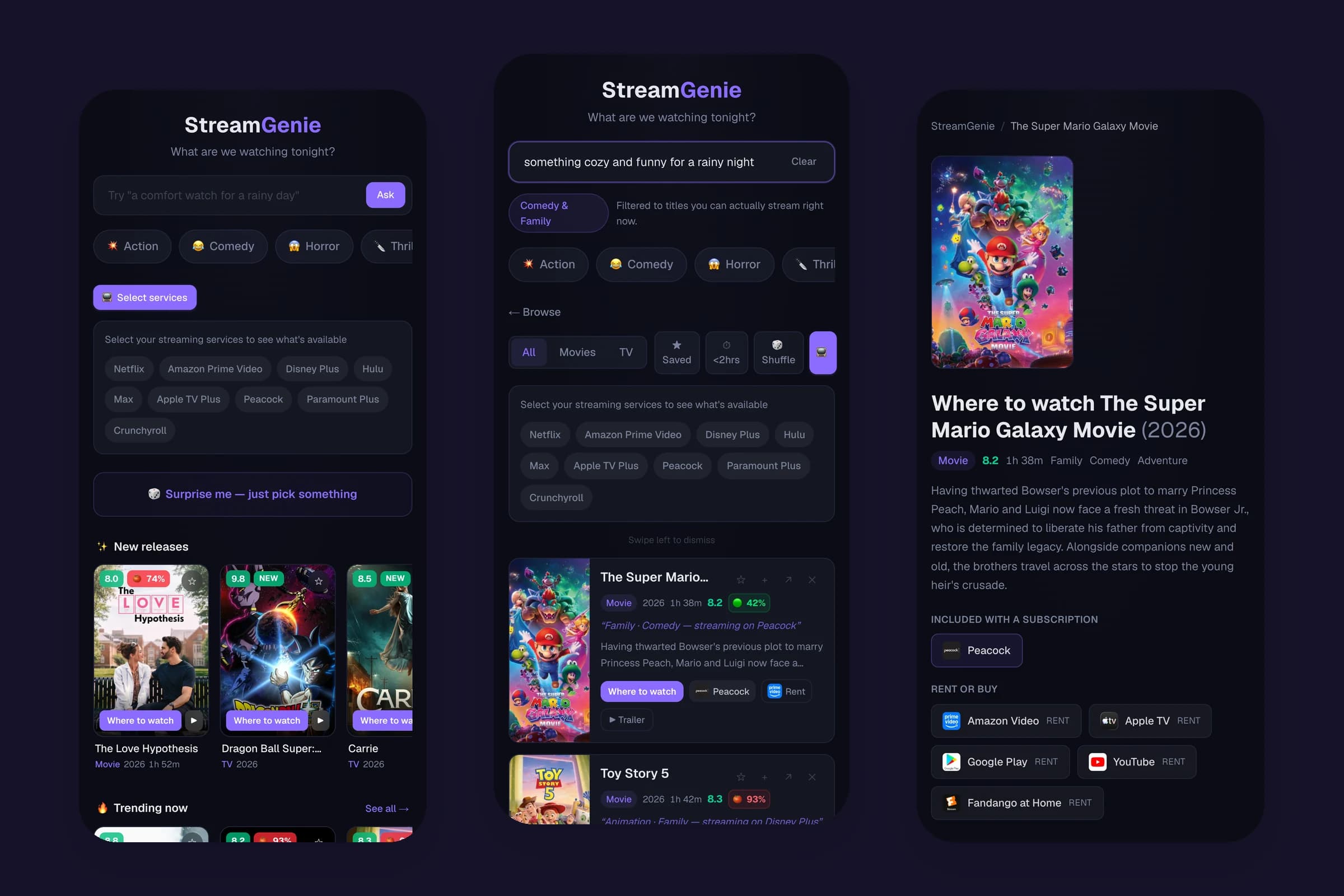
A streaming discovery app that starts from a mood instead of a catalogue. Type what you’re in the mood for, pick the services you already pay for, and get titles you can actually watch tonight — with exactly where to stream, rent, or buy each one.
At a glance
- Context
- Everyone has three or four streaming services and still spends twenty minutes choosing something to watch.
- Problem
- Catalogues are organised by genre and service, but people decide by mood — and then find out the title isn’t on anything they pay for.
- My role
- Solo: product, interface design, the recommendation engine, and front-end.
- Outcome
- Live at streamgenie.net, with a where-to-watch page for every title so people can find it from search.
Approach
- 01
Start from a mood.
The first thing you see is a question — “What are we watching tonight?” — and a prompt bar that takes plain language like “a comfort watch for a rainy day”. Genre chips and a “Surprise me” button cover the nights you don’t want to type.
- 02
Only show what you can watch.
Pick the services you have, and results are filtered to titles actually streaming on them. Each result says why it matched and where it’s playing.
- 03
Every title answers “where?”
Each title has its own page listing what’s included with a subscription and what you can rent or buy — and those pages are what people find when they search “where to watch …”.
Execution
Plain language in, a short list out.
Built with Next.js on top of TMDB’s catalogue and streaming-availability data. A deterministic parser turns a prompt into genres, moods, and runtime constraints, with an optional language-model layer for prompts it can’t read on its own. Results come with ratings, trailers, a watchlist, and share links.
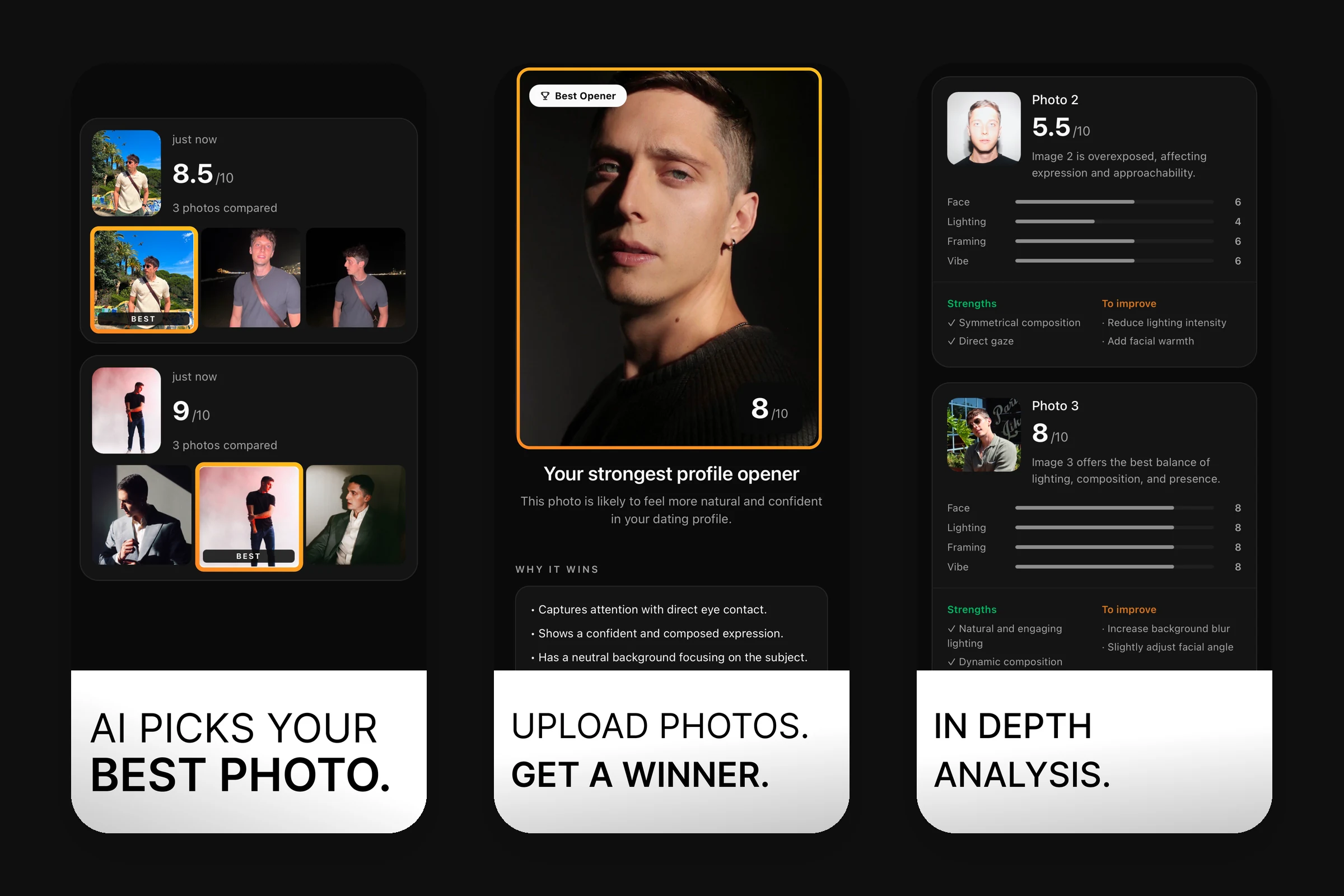
BestPic
Helping people stop overthinking which photo to use.