Pathfinder
An instrument you consult when you need clarity. Not a personality test.
- Role
- Creator · Concept, systems & interaction design
- Year
- 2026
- Status
- Experimental
- Focus
- Conceptual design, Systems thinking, Information visualization, Interaction design
- Links
- Try the prototype
In short
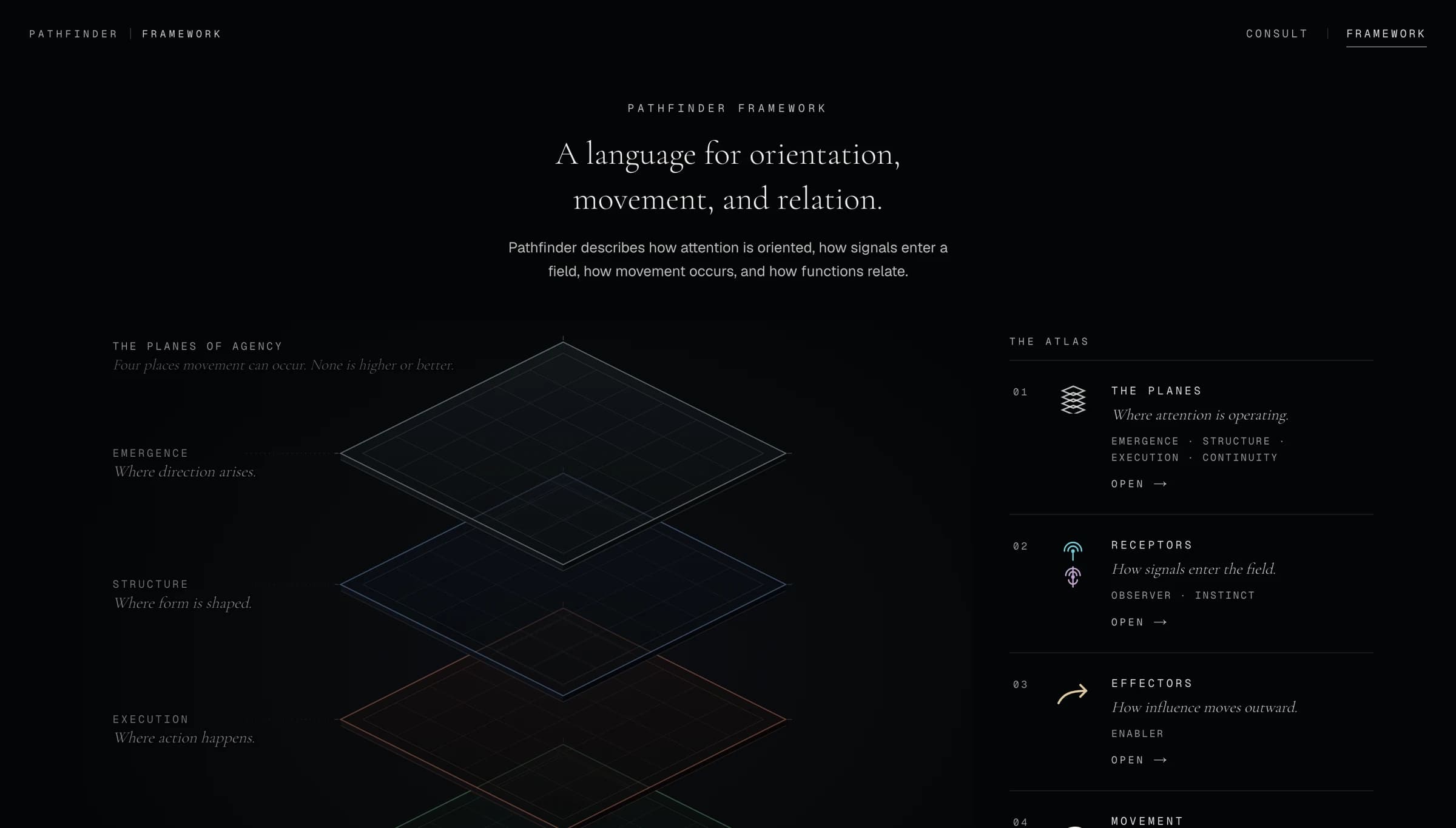
An experimental self-reflection tool that locates where your attention and agency are operating right now — and a visual framework that explains the model. It describes states, never identities.
NoteExperimental and in active development. The model, the questions, and the visuals are all still changing.
Overview
A map that describes, and an instrument that locates.
Most self-assessment tools tell you who you are. Pathfinder tries to do something smaller and more useful: notice where your attention is operating right now, and how you tend to move.
It has two modes. Consult is the instrument — a short, quiet sequence of questions that produces a reading. Framework is an atlas that teaches the model, using the same visual field.
The model
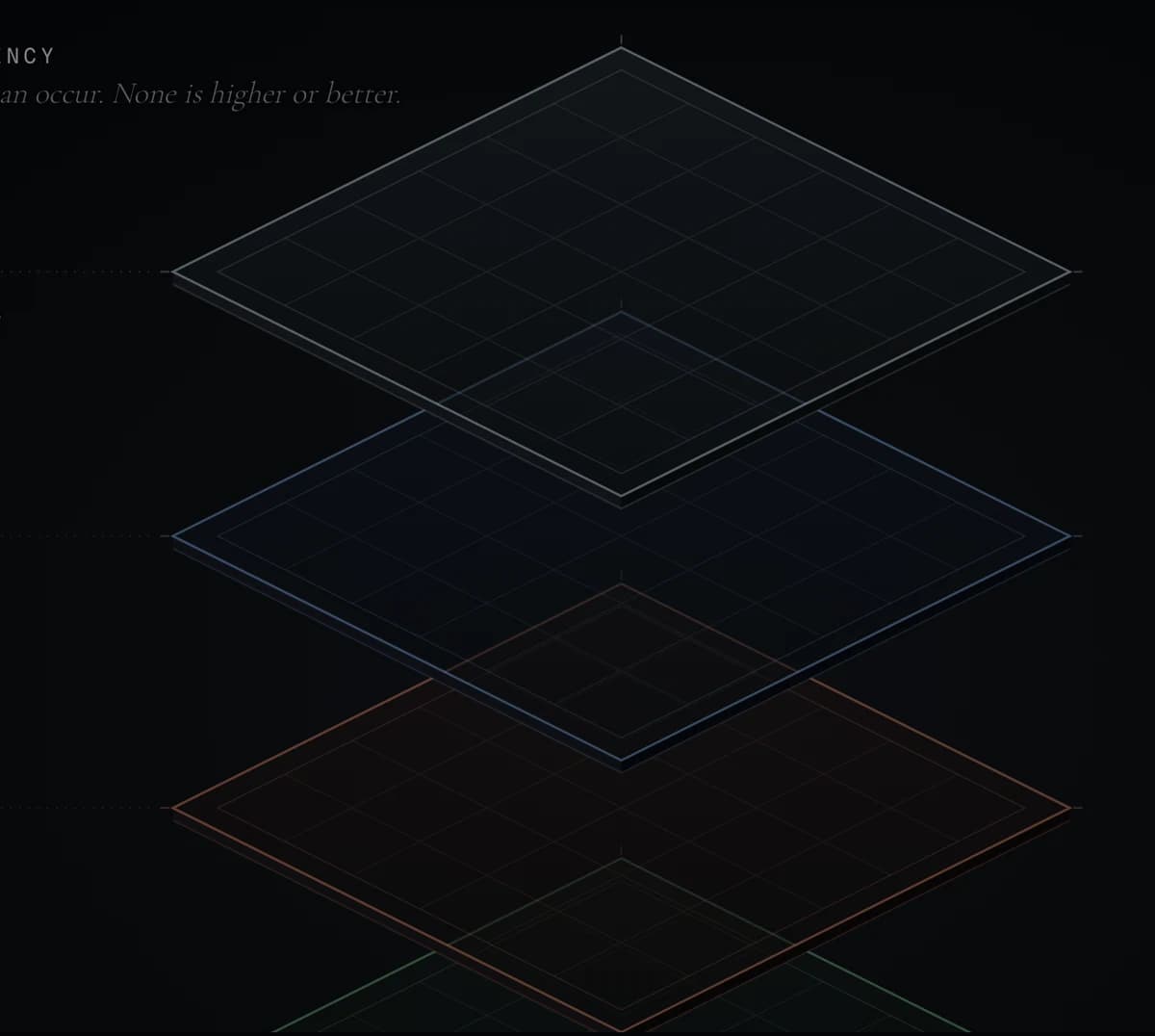
Four planes, two receptors, one effector.
- 01
Planes — where attention is operating.
Emergence (where direction arises), Structure (where form is shaped), Execution (where action happens), and Continuity. They’re stacked in space but never ranked.
- 02
Receptors — how signals enter the field.
Observer and Instinct are scored independently. They’re two channels, not two ends of a spectrum.
- 03
Effectors — how influence moves outward.
The Enabler describes how you move things in the world. Integration isn’t a type or a badge; it emerges from the whole reading.
Design decisions
- 01
Forced choices over ratings.
The first version asked people to rate statements. Almost everyone landed in “distributed” — agreeing a little with everything. Switching to one choice per question (with “none” allowed) gave readings with actual shape.
- 02
Describe states, not identities.
Readings say “appears closest to…” rather than “you are…”. No scores, no percentages, no compatibility charts.
- 03
The model is not the visualization.
The ontology lives in plain data; the field only draws it. That keeps every visual mark honest — each one maps to something in the model.
- 04
Don’t collect what the reading doesn’t use.
No names, no accounts. The reading is kept for the session and set down when you’re done.
Ghost Boy
A character born from the tension between presence and disappearance.