OnCue
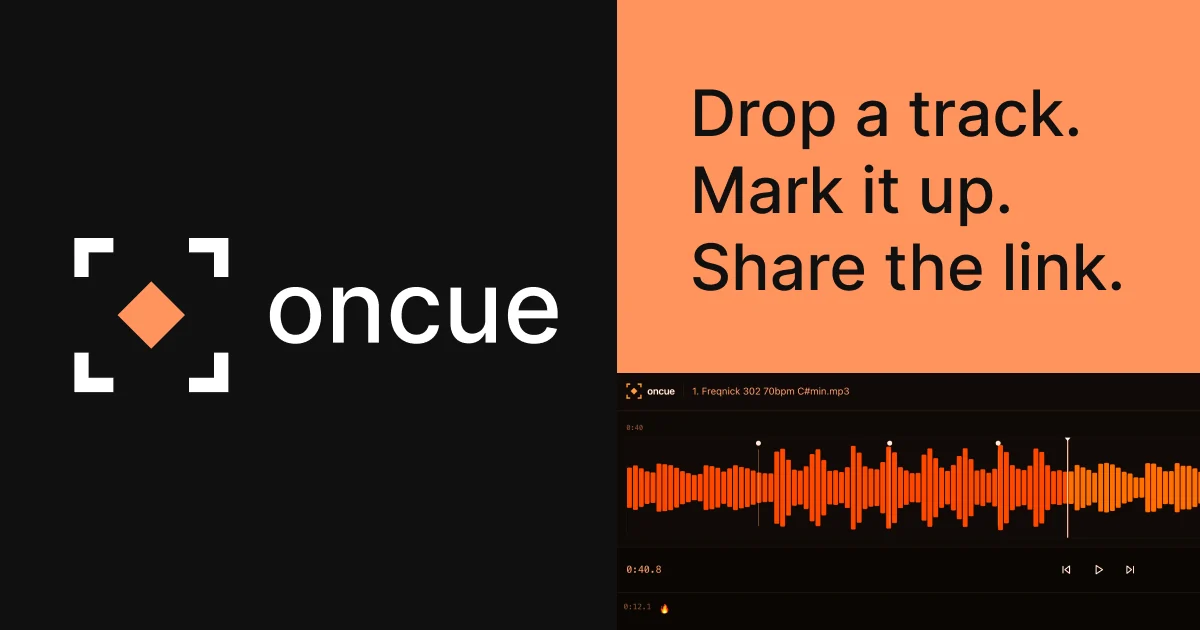
Timestamped feedback for audio. Drop a track, mark it up, share the link.
- Role
- Founder · Product, design & development
- Year
- 2026
- Status
- Live
- Focus
- Product strategy, UX/UI, Interaction design, Front-end & backend, Brand
- Links
- oncue.audio
In short
A web app for leaving notes directly on a waveform — so feedback stays attached to the exact moment it’s about. I designed, built, and launched it, then repositioned it when real usage told a different story than the one I started with.
Overview
Feedback belongs on the moment, not in a paragraph.
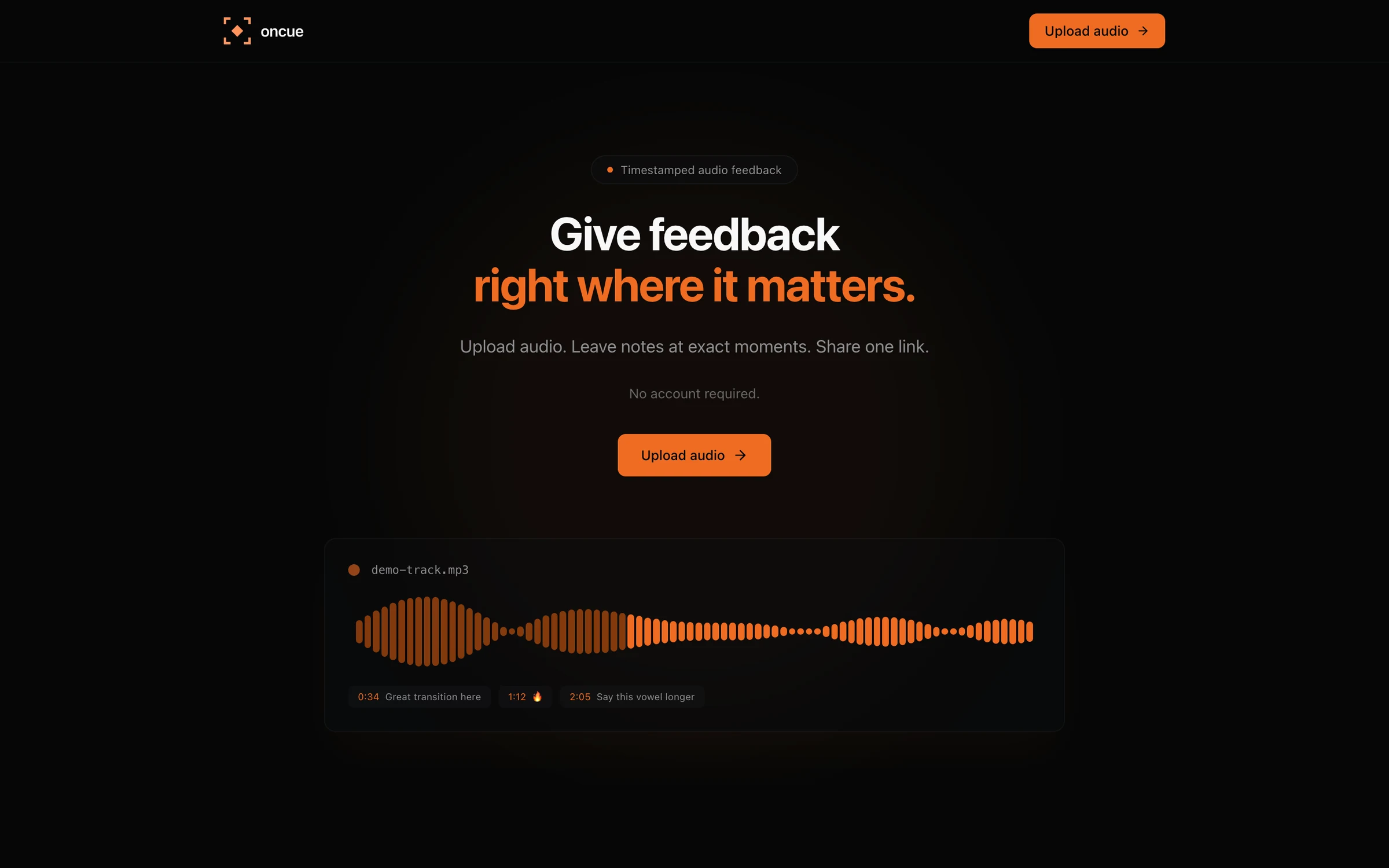
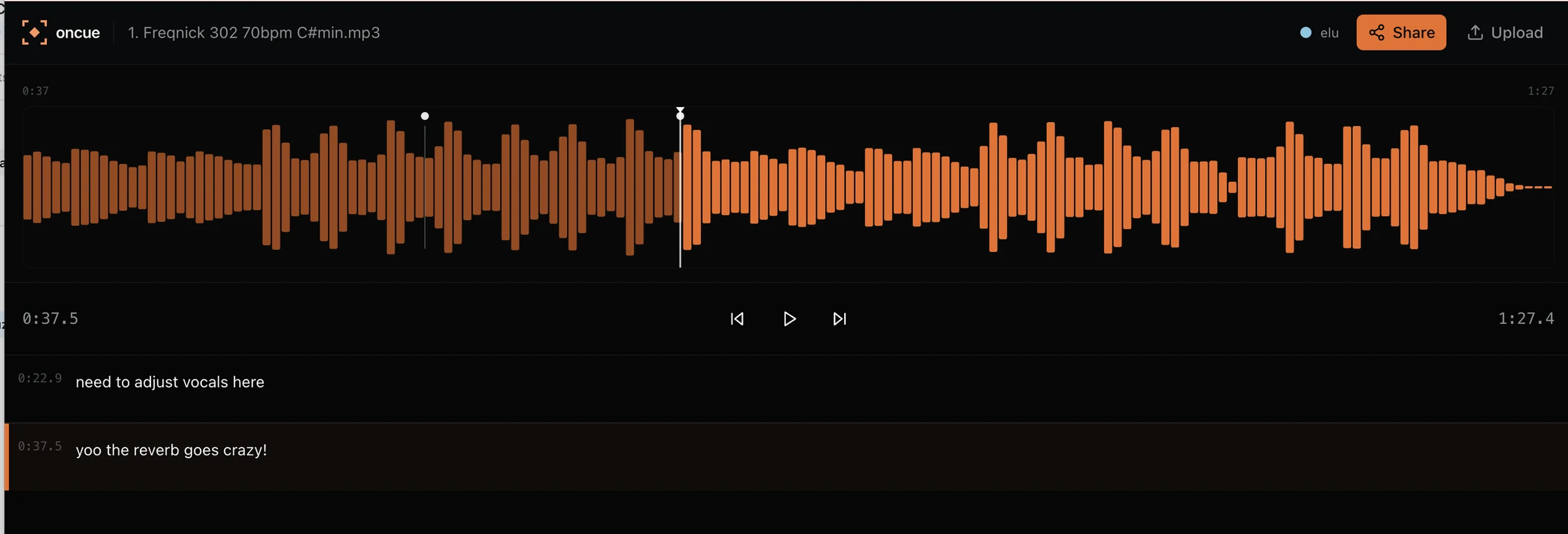
Feedback on audio usually arrives as a wall of text: “around 1:40 the vocal is a bit…” OnCue puts it where it belongs. Drop in an .mp3 or .wav, click the waveform to leave a timestamped note or a one-tap macro, and share a link. There are no accounts — you’re a name and a colour.
It’s for anyone whose work is listened to: musicians and producers, teachers and students, podcasters and editors.
Key decisions
- 01
The share link is the product.
No sign-up on either side. The person receiving feedback opens a link and hears the track with every note in place. Removing accounts removed the biggest reason not to try it.
- 02
Macros for the things you say every time.
Teachers and producers repeat themselves. One-tap macros turn the most common comments into a single click on the waveform.
- 03
The waveform is the interface.
Click the track to drop a note at that exact moment. The note list stays in step with playback, on the editor and on the shared page alike.
What changed
I built a collaboration tool. People used it to give feedback.
OnCue launched as a place for back-and-forth discussion. The usage data disagreed: on most shared tracks, the only notes came from the person who uploaded it. Nobody wanted a conversation — they wanted to give clear feedback, fast.
So I repositioned the product around one-way feedback — “Give feedback right where it matters” — and wrote landing pages for the people who do that most: language teachers and music teachers. Before building the obvious next feature, voice notes, I’m asking teachers whether they’d actually use it.
Pathfinder
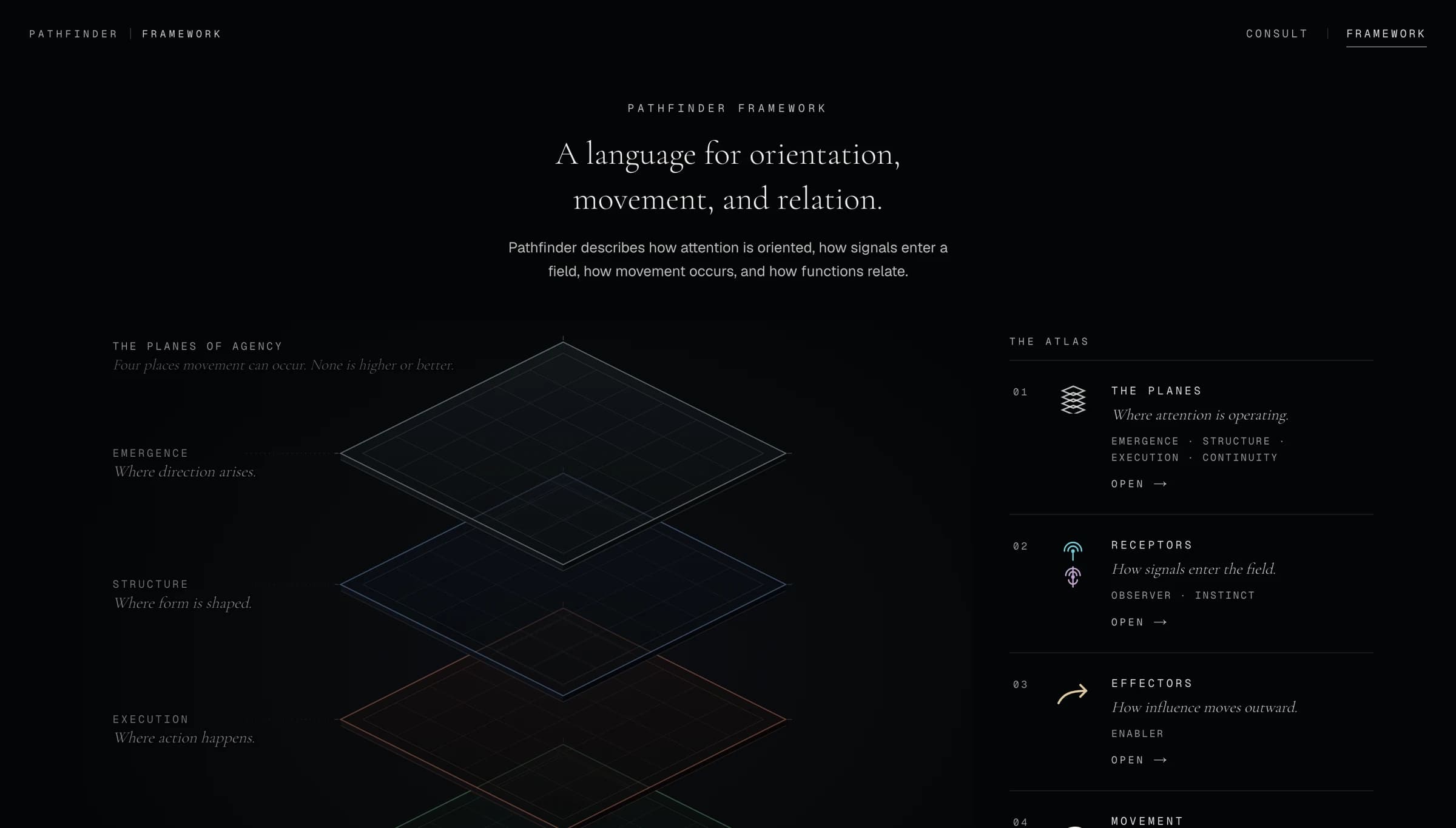
An instrument you consult when you need clarity. Not a personality test.